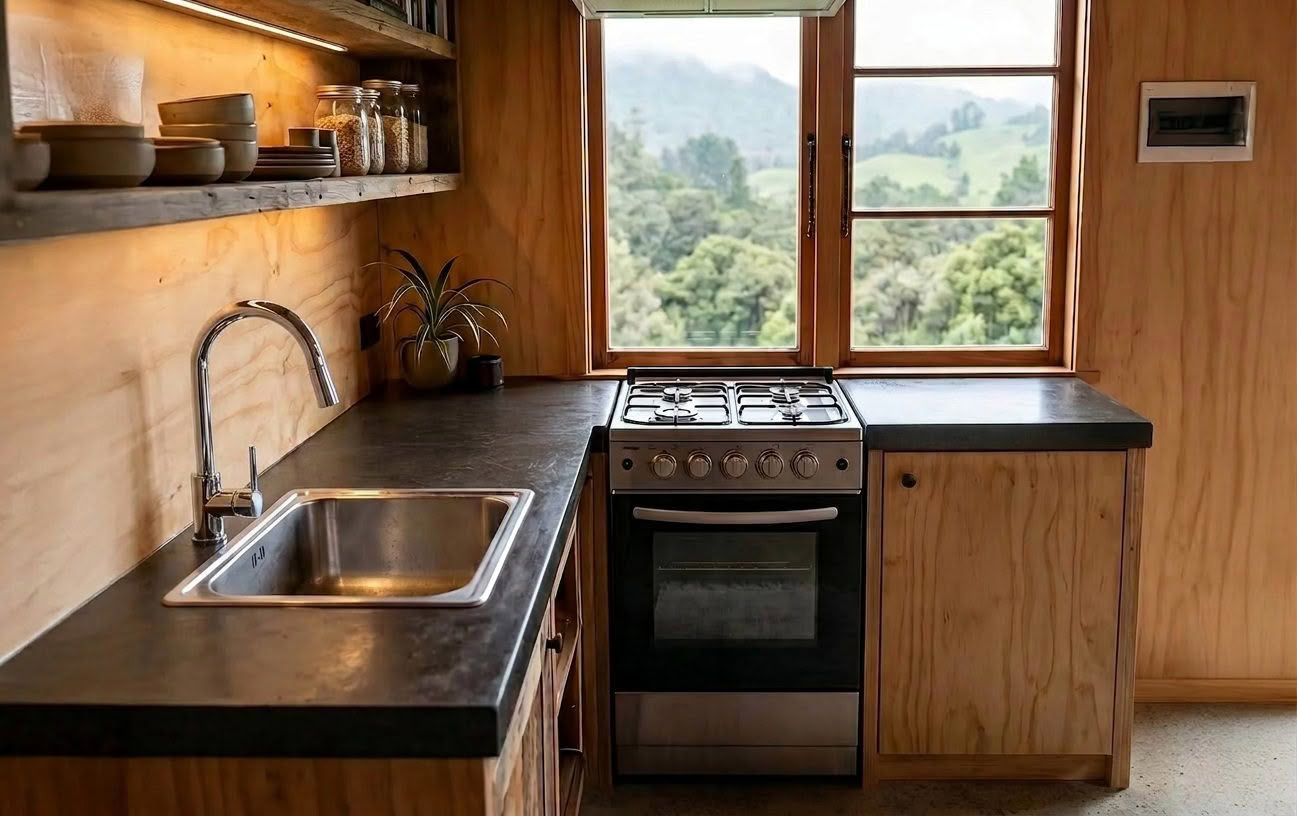

Cooking in a compact off-grid kitchen is genuinely one of life’s great pleasures, the simplicity of a well-seasoned pot on a gas flame, a stunning view out the window, and no restaurant menu to limit your imagination. But cooking with LPG in a campervan or tiny home comes with its own set of rules that are quite different from a standard kitchen. Get these right, and you’ll cook confidently, safely, and efficiently for years on the road.
Here are five essential tips every off-grid LPG cook should know.
1. Always Ventilate, Even in the Middle of Winter
This one surprises people: even if your tiny home or campervan has permanent ventilation vents installed (as required by NZ standard AS/NZS 5601.2), you should still open a window or activate your rangehood whenever you cook.
Why? Because LPG combustion produces significant amounts of water vapour in addition to carbon dioxide. In a sealed small space, this moisture accumulates rapidly, fogging your windows, dampening your soft furnishings, and creating the ideal conditions for mould. Over time, chronic moisture damage in a campervan is expensive and difficult to fix.
Opening even a small window above the cooking zone during meal prep dramatically reduces moisture build-up, keeps your air fresher, and supports the combustion process itself. Think of it as a free performance upgrade for both your hob and your van.
2. Match Your Pan Size to Your Burner
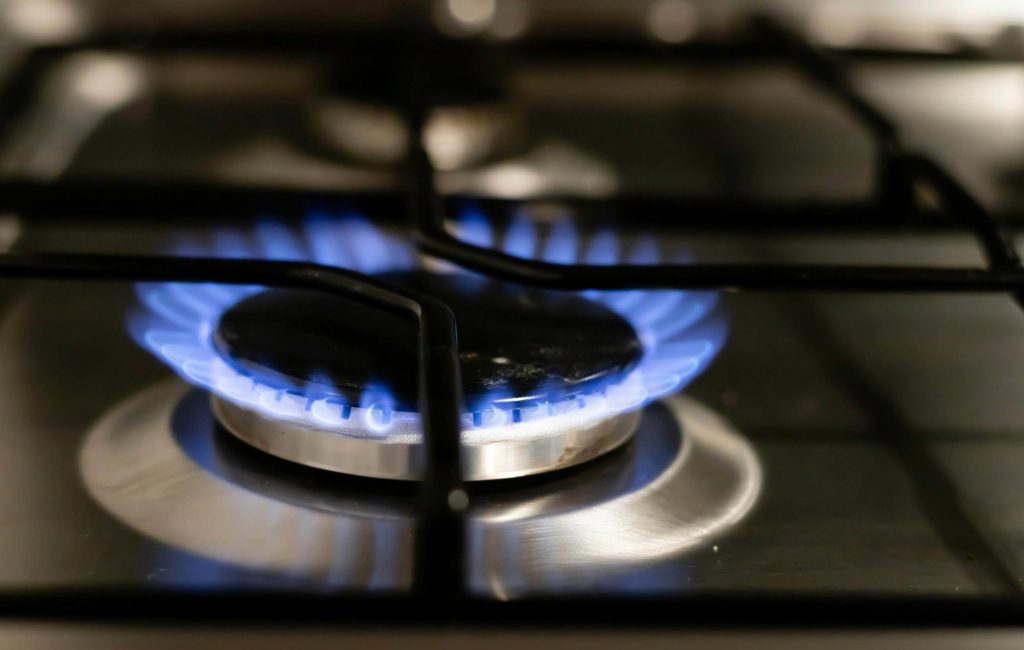
In a home kitchen, leaving a small saucepan on a large burner is a minor inefficiency. Off-grid, it’s a meaningful waste of a finite resource. When flames curl up the sides of your pot rather than concentrating on the base, you’re losing that heat energy to the surrounding air, not to your food.
The fix is simple: use your smallest burner for small pans, and scale up only when the cookware genuinely requires it. This habit alone can noticeably extend how long a gas bottle lasts, which matters when you’re three days from the nearest town.
Other efficiency tips:
- Use a lid whenever possible, it dramatically reduces cooking time
- Bring liquids to the boil on high, then turn down to a simmer
- Defrost food before cooking rather than relying on heat to do the work
3. Never Get Caught Out, Know Your Gas Level
Running out of gas mid-meal in a remote location is more than an inconvenience — in cold weather, it can be genuinely problematic. The challenge is that standard LPG cylinders give no obvious visual indication of how full they are.
Two reliable solutions:
Get into the habit of checking your gas level before starting any significant cooking session, and always carry a second cylinder as backup.
- Magnetic level indicators: These strip-style indicators attach to the outside of your gas bottle and change colour to show approximate fill level based on temperature differential. Inexpensive and always visible.
- Ultrasonic gas level detectors: Devices like the Gaslow pen use sound waves to accurately read the liquid level inside any cylinder. More precise, and worth the investment if you do extended remote travel.
Get into the habit of checking your gas level before starting any significant cooking session, and always carry a second cylinder as backup.
4. Keep Fire Safety Within Arm’s Reach
Space is tight in a campervan or tiny home, which means when something goes wrong at the hob, you need a response within seconds, not after you’ve climbed over the bed to reach a fire extinguisher stored under the seat.
Mount a fire blanket or a compact aerosol dry-powder extinguisher within direct reach of your cooking zone. Both are small, inexpensive, and potentially life-saving.
Critical rule: Never use water on a cooking fire. In a confined space, throwing water on a grease or oil fire causes a dangerous flash explosion. A fire blanket smothers the fire without this risk — keep one accessible at all times.
5. Install a Dual LPG and Carbon Monoxide Detector
This is the single most important investment you can make in your off-grid kitchen setup. Carbon monoxide is colourless and odourless — you cannot smell, see, or taste it. At low concentrations it causes headaches and nausea that are easily mistaken for other ailments. At higher concentrations, it is fatal.
A dual LPG/CO detector addresses two separate risks in one unit:
- LPG leak detection: alerts you to gas escaping from connections or the hob itself
- Carbon monoxide detection: alerts you if combustion by-products are building up in the space
Because LPG is heavier than air, the sensor must be mounted low on the wall or floor — not at head height. This positioning ensures it catches a leaking gas pool before it reaches ignition concentration.
Detectors are inexpensive, easy to install, and run on a standard battery. There is no good reason not to have one.
Cook Confidently, Off-Grid
LPG cooking in a campervan or tiny home rewards those who take a little time to understand the basics. Ventilate consistently, use your gas efficiently, know your fuel level, keep safety gear close, and install a detector — these five habits will keep your off-grid kitchen safe, efficient, and enjoyable for every trip ahead.
Ready to upgrade your off-grid cooking setup? Explore NZ-certified gas hobs and cookers at Challenger Appliances.
Always have your gas appliances installed and inspected by a New Zealand Certifying Gasfitter.