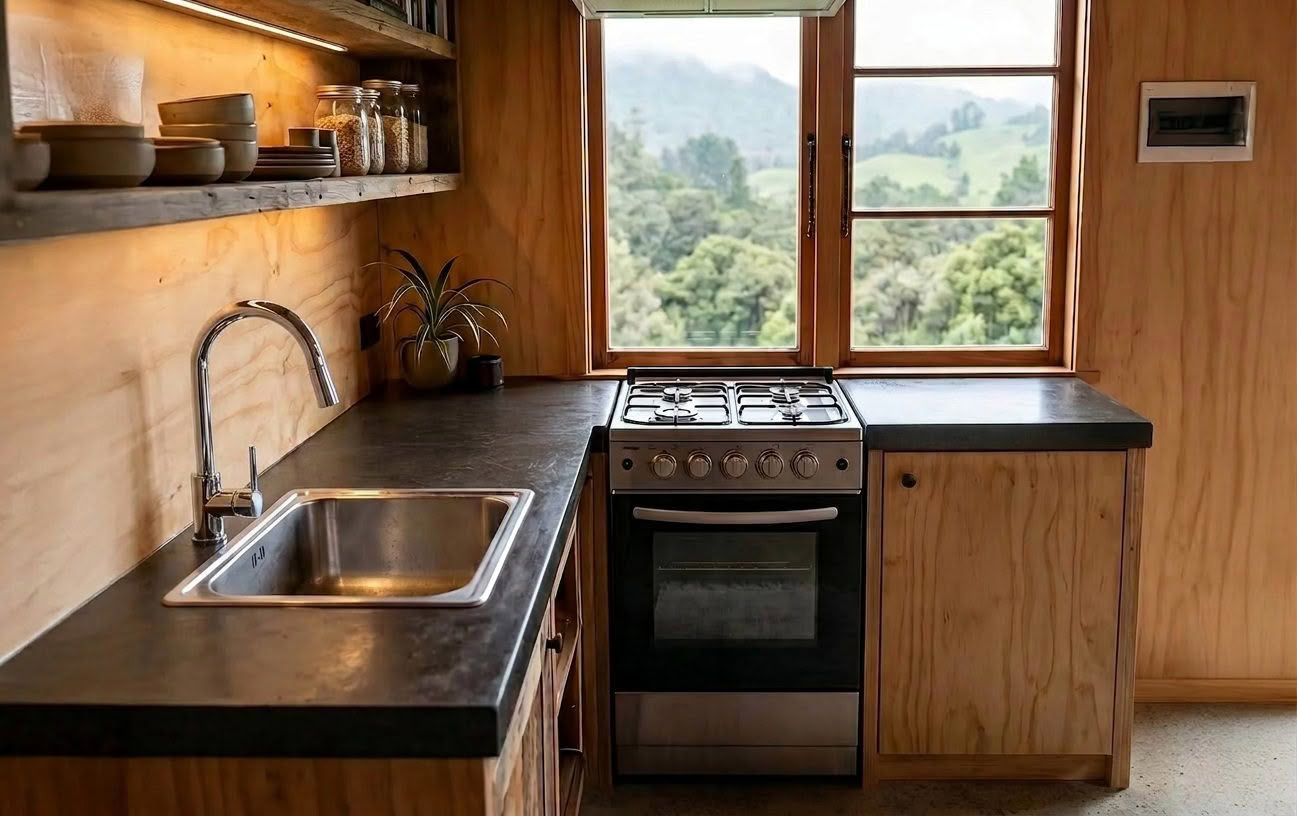

Your gas hob is the beating heart of your off-grid kitchen. Whether you’re parked deep in the Coromandel bush or settled into a tiny home lifestyle, a reliable, well-maintained hob means hot meals, happy mornings, and one less thing to worry about when you’re far from the nearest hardware store.
The good news? Keeping your LPG hob in peak condition doesn’t require specialist tools, just consistency and knowing what to look for.
Here’s your complete guide to cleaning, maintaining, and troubleshooting your off-grid gas hob.
Daily Cleaning: Small Habits, Big Difference
The most common cause of hob problems isn’t mechanical failure, it’s neglected cleaning. Food spills, grease, and moisture can block burner ports, corrode components, and cause uneven flames over time.
What to use: Warm soapy water and a soft cloth or non-scratch sponge. That’s it. Avoid abrasive scourers, steel wool, or harsh chemical sprays, these scratch stainless steel surfaces and can degrade seals.
The critical rule: Never let water or food debris enter the burner ports (the small holes around the burner crown) or the jet (the tiny brass nozzle at the burner’s base). These are precision components where even a partial blockage causes combustion problems.
If a port becomes clogged, use a thin needle or fine wire to gently clear it, never a toothpick, which can break off and make things worse.
After cleaning, always ensure the burner caps are replaced correctly and seated flat before relighting.
Reading Your Flame: What It’s Telling You
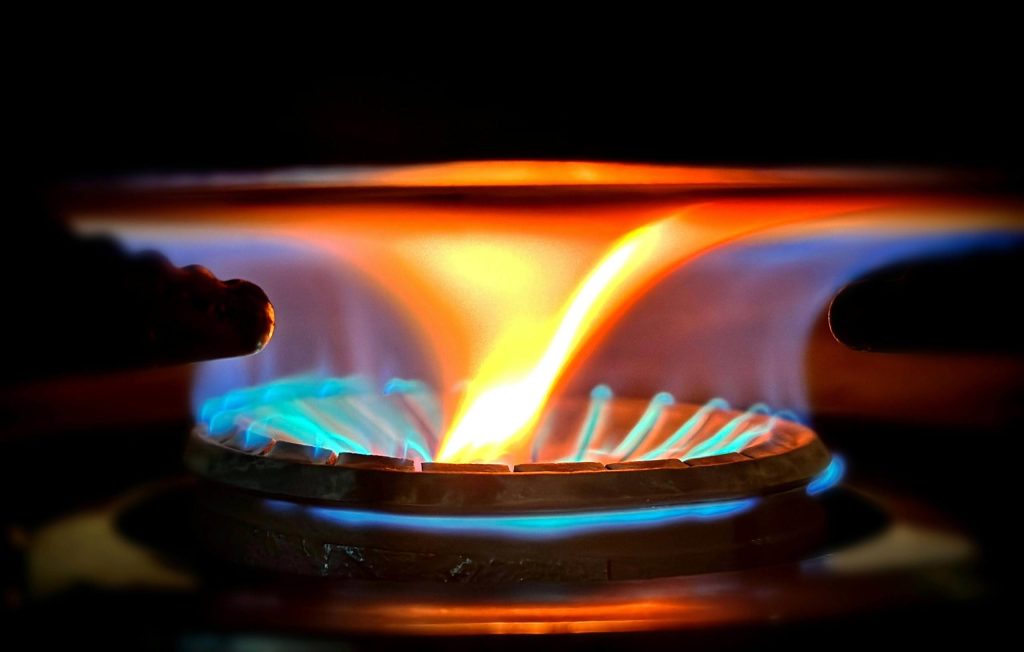
A healthy LPG flame should be crisp, steady, and predominantly blue with only a small inner cone of colour. The flame is communicating constantly — here’s how to interpret it:
Yellow or Orange Flame
This is the most common issue off-grid users encounter and it signals incomplete combustion. The burner isn’t receiving enough oxygen or the gas-to-air mixture is off. Common culprits include:
– Blocked burner ports or a partially clogged jet
– Spider webs inside the burner tube (a surprisingly frequent problem in campervans parked outdoors)
– Insufficient ventilation in the space
Start by removing and thoroughly cleaning the burner, then check your ventilation vents are unobstructed.
Noisy, Lifting, or “Detached” Flame
If the flame lifts off the burner or makes a roaring sound, gas pressure is too high. Check your LPG regulator, it may need adjusting or replacing. A faulty regulator is a job for a licensed gasfitter.
Uneven Flame Across the Burner Ring
Usually caused by one or more blocked ports. Clean the burner crown thoroughly and check each port individually.
Troubleshooting the Thermocouple
Here’s a scenario almost every off-grid gas user encounters:
– You hold the knob down, get a flame, release it, and the burner goes straight out. This is almost always your thermocouple at work.
– The thermocouple is a small safety device that senses whether the burner is lit. If it doesn’t detect heat within a few seconds of you releasing the knob, it automatically cuts the gas supply, a critical safety feature that prevents gas build-up if a flame is accidentally extinguished.
How to fix it:
– Locate the thermocouple, it’s the thin metal probe sitting in the flame path
– Check it’s correctly positioned so the flame actually contacts the tip
– If the tip is blackened with carbon build-up, gently rub it with fine-grit sandpaper to restore conductivity
– If the problem persists after cleaning and repositioning, the thermocouple likely needs replacement, these are inexpensive parts available from gas appliance suppliers
Your Quarterly Gas Leak Check
Every few months, and always after moving your setup or reconnecting cylinders, perform a soapy water test on all gas connections and fittings. Mix dish soap with water and spray or brush it onto every joint, connection, and the regulator. Turn the gas on (without lighting anything) and watch carefully. Bubbles forming at any joint indicate a leak. Turn the gas off immediately and contact a certifying gasfitter before using the hob again.
Never use a naked flame to check for leaks.
Annual Professional Service
Even with excellent DIY maintenance, an annual check by a licensed gasfitter is worth every cent. They can pressure-test your entire system, inspect the regulator, and catch issues invisible to the untrained eye — especially important in the damp, high-vibration environment of a campervan or tiny home on wheels.
Looking for a reliable, easy-to-maintain off-grid gas hob? Browse NZ-certified options at Challenger Appliances.
For any gas connection, installation, or repair work, always engage a New Zealand Certifying Gasfitter.